Myofunctional Therapy in Rural Cass County
Breathe Better. Sleep Better. Feel Better.
Myofunctional therapy is like physical therapy for the muscles of your mouth, tongue, and face.
Through simple, targeted exercises, we help retrain these muscles so they work the way they’re supposed to—for healthier breathing, sleeping, speaking, chewing, and swallowing.
If you or your child struggles with mouth breathing, snoring, sleep issues, or tongue posture, myofunctional therapy may be a great option.
What is Myofunctional Therapy?
Myofunctional therapy is an exercise-based program that:
- Strengthens the tongue, lips, and facial muscles
- Encourages proper tongue position and lip seal
- Promotes healthy nasal breathing (through the nose instead of the mouth)
- Helps create healthier patterns for chewing and swallowing
These exercises are gentle and can be done at home between visits. With consistency, they can help improve overall oral function and support better long-term health.
The Four Main Goals of Myofunctional Therapy
Our program is built around four key goals:
- Nasal Breathing
Breathing through the nose helps filter, warm, and humidify the air you inhale. It also supports better sleep and facial development—especially in children.
- Lip Seal
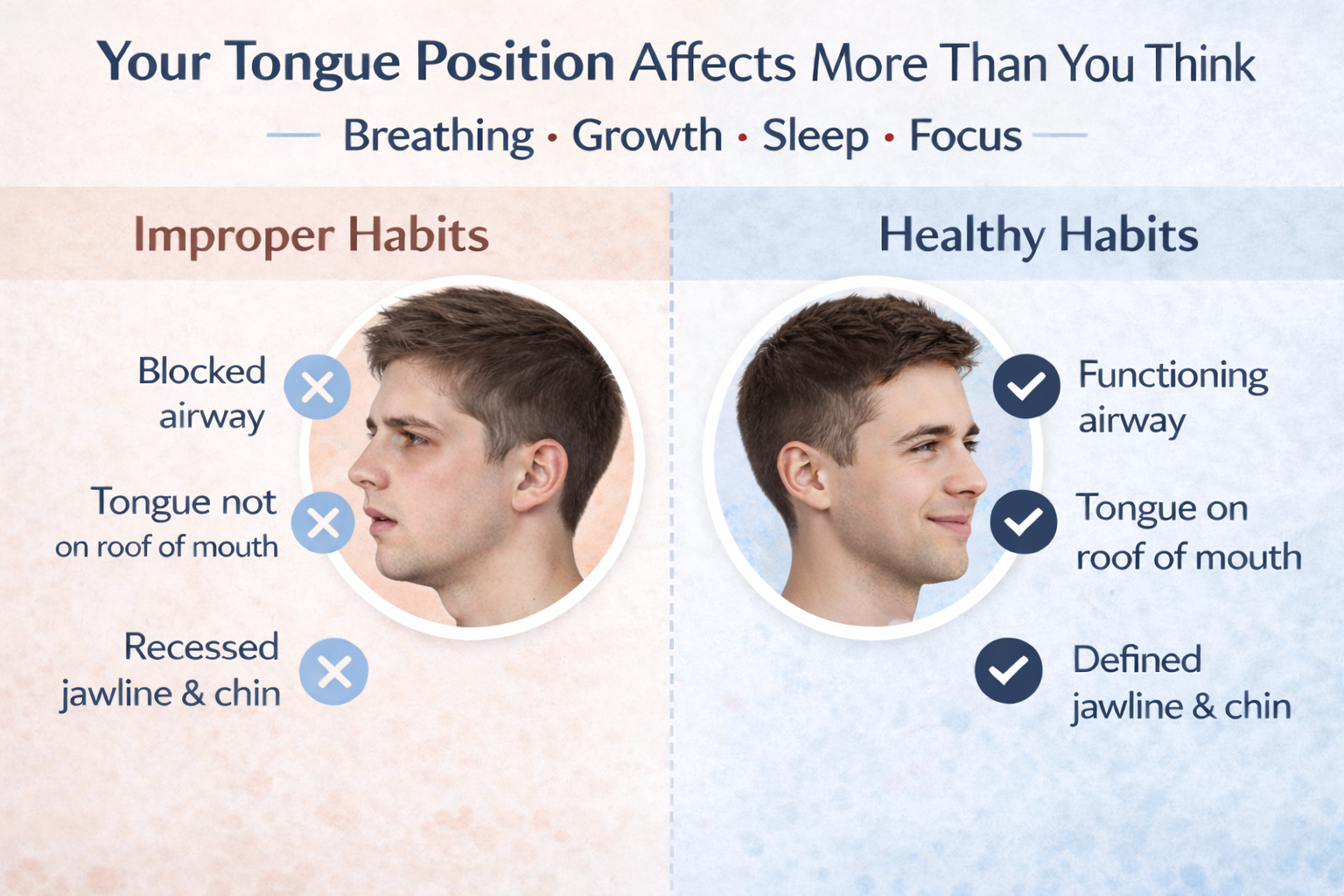
Keeping the lips closed at rest helps maintain proper jaw position and reduces dry mouth, mouth breathing, and related dental issues. - Proper Tongue Posture
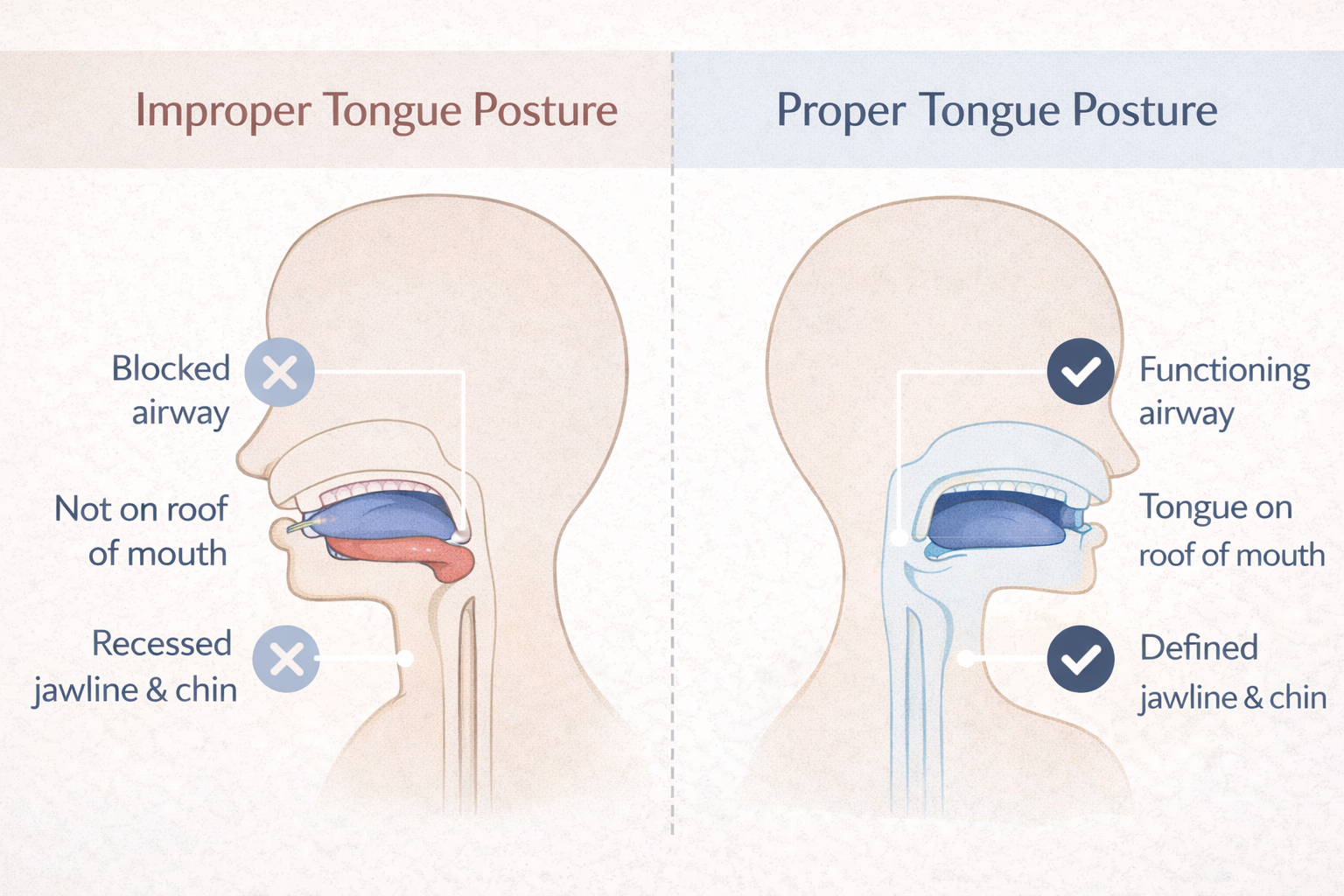
The tongue should rest gently on the roof of the mouth, not on the floor of the mouth or between the teeth. Proper tongue posture supports healthy jaw and facial growth in children and helps maintain orthodontic results. - Correct Swallowing Pattern
A proper swallow uses the tongue and facial muscles in a coordinated way. An incorrect swallow (often called a “tongue thrust”) can lead to tooth movement, bite problems, and strain in the muscles and joints.
Who Can Benefit From Myofunctional Therapy?
We may recommend myofunctional therapy for both children and adults who experience issues such as:
- Sleep apnea or sleep-disordered breathing
- Snoring
- Tongue or lip ties (before or after a frenectomy)
- Open-mouth posture
- Mouth breathing (day or night)
- Tongue thrust
- Teeth clenching or grinding (bruxism)
- Crowded teeth or orthodontic relapse (teeth shifting after braces)
- Concerns about craniofacial (jaw and facial) growth in children
- Difficulty chewing or swallowing
- Sensitive or overactive gag reflex
- Speech delays or past speech therapy
- Challenges with nursing in infants
Myofunctional therapy is often part of a team approach, working alongside your dentist, orthodontist, pediatrician, ENT, sleep specialist, lactation consultant, or speech therapist.
What To Expect: Your Myofunctional Therapy Journey
1. Comprehensive Evaluation
- Review your medical and dental history
- Ask about your symptoms (sleep, breathing, speech, chewing, or swallowing concerns)
- Assess your airway and breathing patterns
- Examine your lips, tongue, and oral structures
- Take photos as needed to document posture and function
We’ll explain everything as we go and encourage you to ask questions at any time.
2. Personalized Treatment Plan
After your exam, your myofunctional therapist will:
- Discuss the findings and how they relate to your symptoms
- Explain whether myofunctional therapy is recommended
- Coordinate with your dentist or other healthcare providers when necessary
- Create a customized exercise plan based on your specific needs and age
This plan will outline which exercises to do, how often to do them, and what goals we’re working toward together.
3. Regular Therapy Visits
- You’ll typically meet with your myofunctional therapist every 2–3 weeks.
- Appointments are usually about 30 minutes long.
- During these visits, we will:
- Review your progress and answer questions
- Check your technique and adjust exercises as needed
- Gradually introduce new exercises as you improve
4. Treatment Length
Treatment length varies from person to person and depends heavily on consistency with home exercises. Most patients work with us for several months so that new, healthy habits become automatic and long-lasting
Quick Self-Screening Questions
You or your child might benefit from a myofunctional evaluation if you answer “yes” to any of the following:
- Do you feel tired or unrefreshed during the day, even after a full night’s sleep?
- Has anyone told you that you snore or grind your teeth at night?
- Do you notice that you or your child breathe through the mouth during the day or at night?
- Are your teeth crowded, or have they shifted after braces (orthodontic relapse)?
- Have you ever had speech problems or needed speech therapy?
- Is there a history of frequent ear infections, allergies, anxiety, depression, or gastrointestinal issues?
- Do you or your child have difficulty chewing, swallowing, or nursing?
If any of these sound familiar, we’d be happy to evaluate whether myofunctional therapy is right for you.
Myofunctional Therapy for Kids
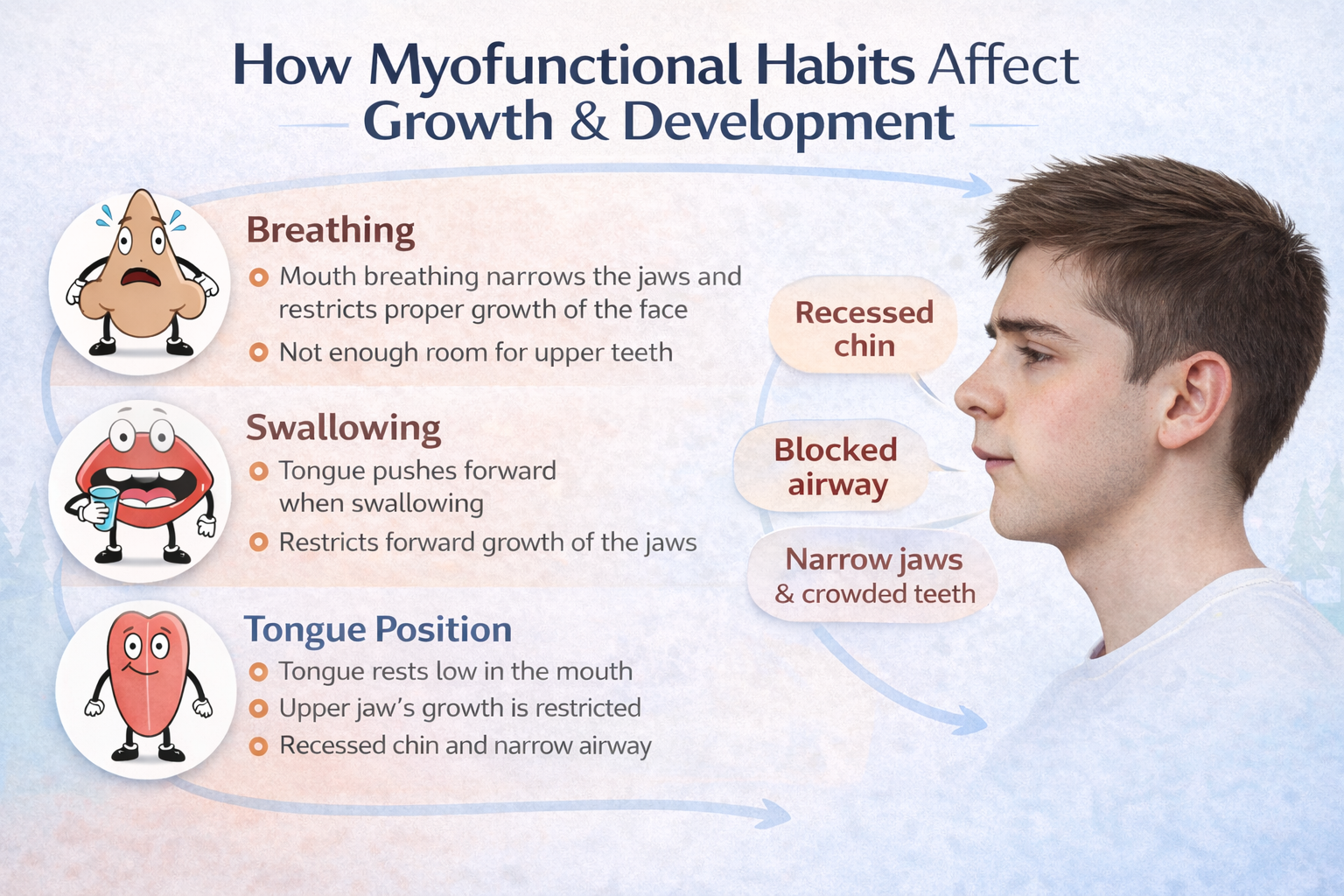
Healthy oral habits early in life can influence how the face and jaws grow. For children, myofunctional therapy may help with:
- Supporting proper jaw and facial development
- Improving nasal breathing and reducing mouth breathing
- Decreasing the risk of orthodontic problems or relapse
- Supporting clearer speech and better sleep
We work gently and patiently with children, using age-appropriate exercises and lots of encouragement to make visits positive and fun.
Myofunctional Therapy for Adults
It’s never too late to improve function. Adults often seek myofunctional therapy for:
- Sleep apnea or snoring
- Chronic mouth breathing or daytime fatigue
- Jaw tension, clenching, or grinding
- Orthodontic relapse after braces or aligners
- Ongoing issues with swallowing, chewing, or speech
Our goal is to help you breathe more efficiently, sleep more soundly, and protect your teeth and jaw joints over the long term.
Meet Our Myofunctional Therapist

Paige Scholz, RDH
Paige is a registered dental hygienist with specialized training in myofunctional therapy. She has a passion for helping patients of all ages improve their breathing, sleep, and quality of life through gentle, effective exercises.
If you have questions about myofunctional therapy or wonder whether it could help you or your child, Paige is happy to guide you
Email: [email protected]
Frequently Asked Questions
Is myofunctional therapy painful?
No. The exercises are typically gentle and non-invasive. You may feel your muscles working, but they should not be painful.
Is it just for kids?
No. Both children and adults can benefit from myofunctional therapy. We customize your program based on age, needs, and goals.
Will I still need braces or other treatment?
Myofunctional therapy doesn’t replace orthodontics or medical treatment, but it can support and stabilize those results by correcting the habits that may have contributed to the problem.
How much time does it take at home?
Most exercise routines can be done in short sessions throughout the day. We’ll design a plan that fits into your daily routine as easily as possible.
Ready to Schedule a Myofunctional Therapy Consultation?
Drs. Hagen and Bartholomew offer a range of treatments to help keep your mouth healthy and your smile beautiful, including myofunctional therapy.
If you think you or your child might benefit—or if you’re simply curious and want to learn more—we’d love to talk with you.
Call us: Hagen Dental Phone Number (701) 347-5345
Or request an appointment online to get started.
We look forward to helping you breathe, sleep, and smile with confidence.