
Airway & Sleep Health
Myofunctional Therapy
Simple guided exercises that retrain the tongue and facial muscles to support better breathing, swallowing, and rest.
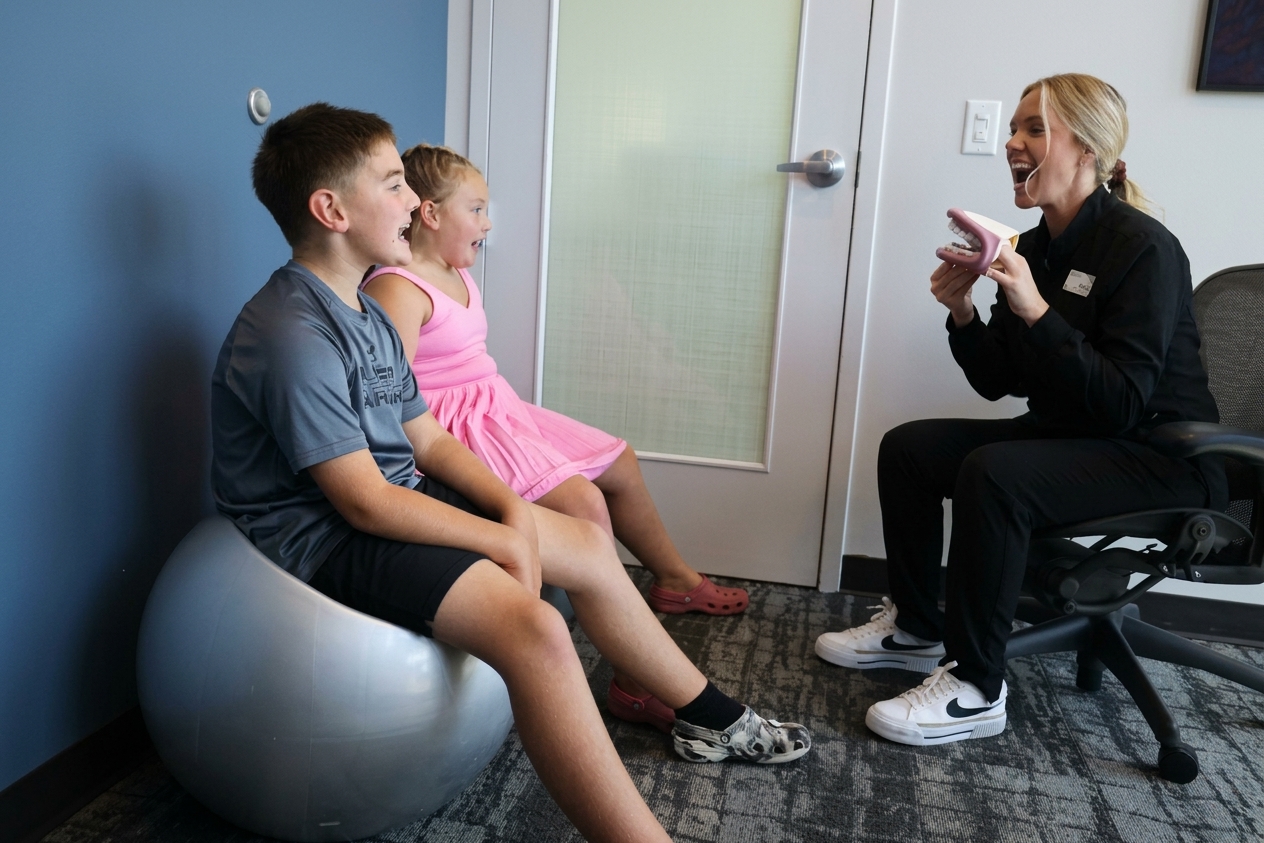
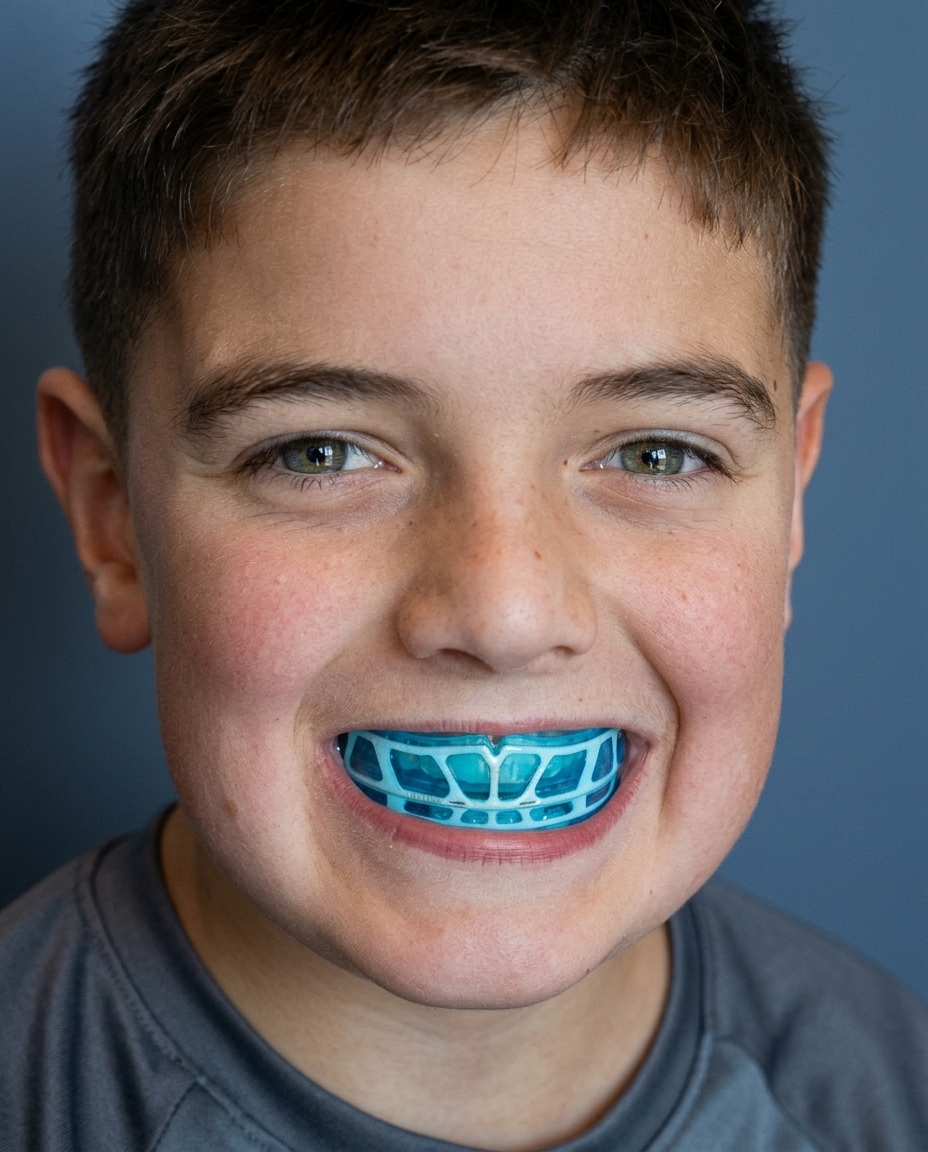
Breathe Better. Sleep Better. Feel Better.
Myofunctional therapy is like physical therapy for the muscles of your mouth, tongue, and face. Through simple, targeted exercises, this approach helps retrain these muscles so they work the way they’re designed to — supporting healthier breathing, sleeping, speaking, chewing, and swallowing.
If you or your child struggles with mouth breathing, snoring, sleep issues, or tongue posture, myofunctional therapy may be the missing piece in achieving lasting oral health and overall well-being.
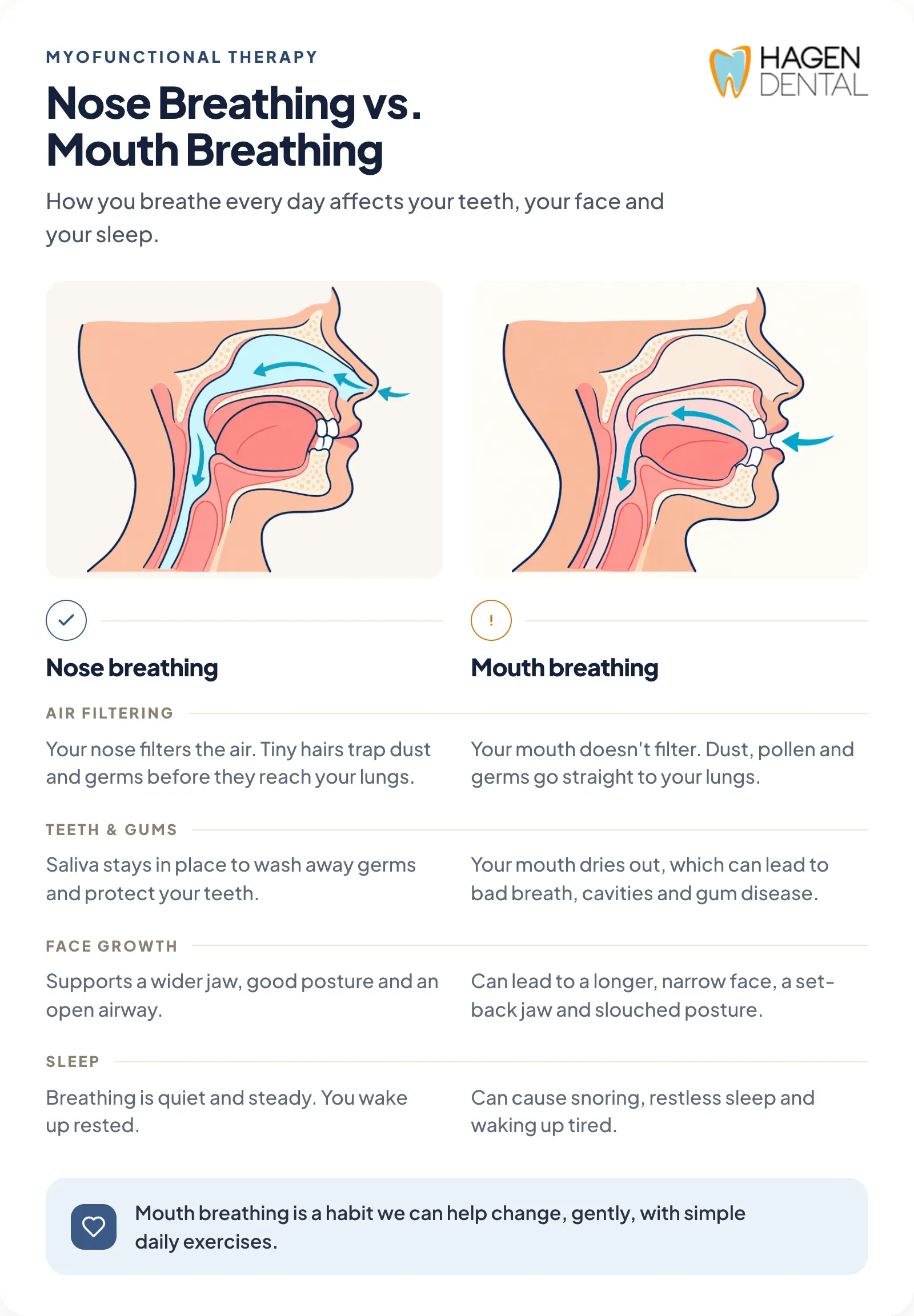
Meet Our Myofunctional Therapist
Paige Scholz
Paige is a registered dental hygienist with specialized training in myofunctional therapy. She is passionate about helping patients of all ages improve their breathing, sleep, and quality of life through gentle, effective exercises.
What Is Myofunctional Therapy?
Myofunctional therapy is a personalized, exercise-based program designed to restore proper function to the muscles of the mouth and face. The program focuses on:
- Strengthening the tongue, lips, and facial muscles
- Encouraging proper tongue position and a healthy lip seal at rest
- Promoting nasal breathing — through the nose instead of the mouth
- Establishing healthier patterns for chewing and swallowing
The exercises are gentle, easy to learn, and designed to be practiced at home between visits. With consistency, they can lead to meaningful improvements in oral function and support better long-term health for both children and adults.
The Four Main Goals of Myofunctional Therapy
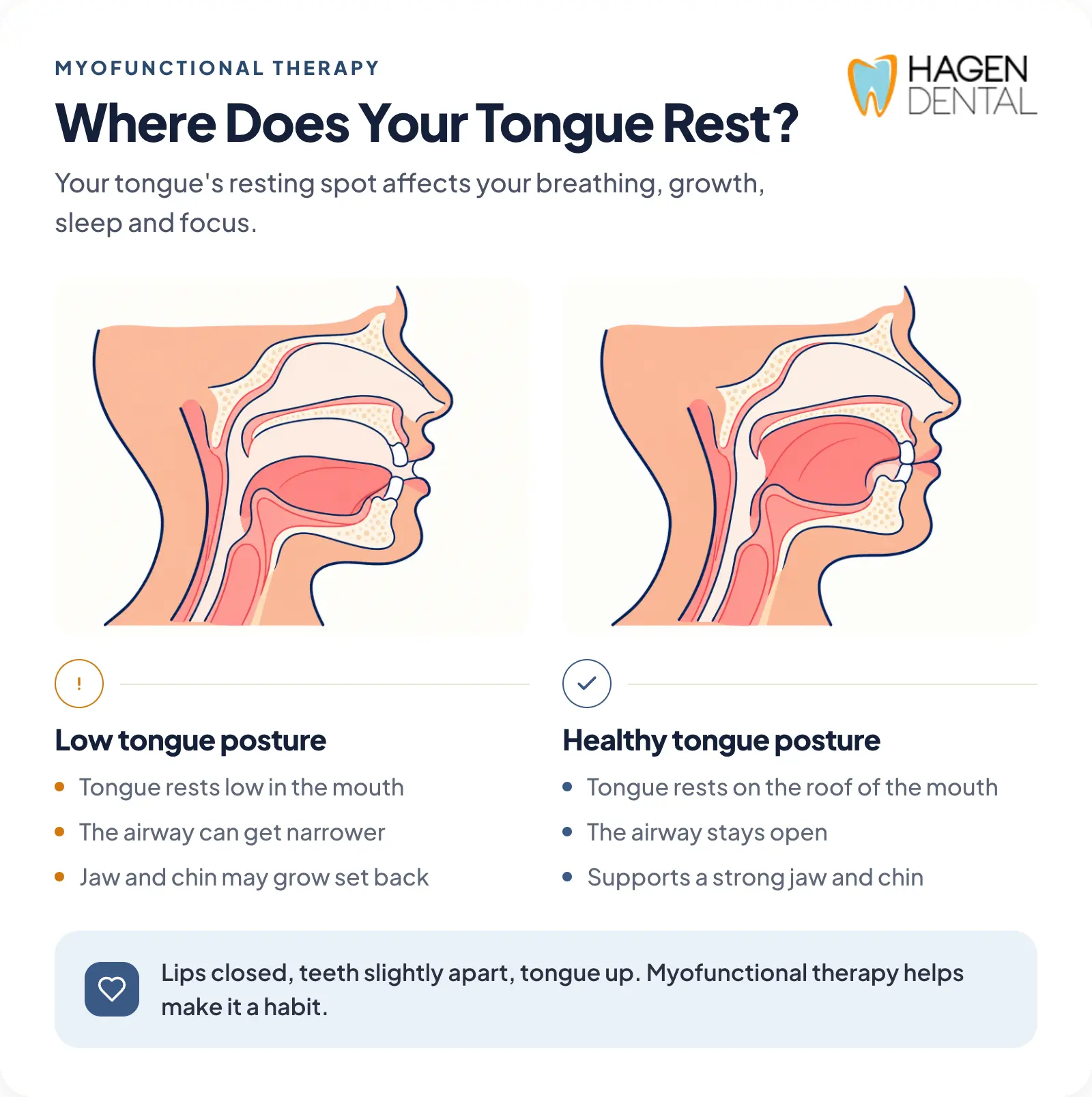
- Nasal Breathing — Breathing through the nose helps filter, warm, and humidify the air before it reaches the lungs. Nasal breathing also supports better sleep quality and healthy facial development — especially in growing children.
- Lip Seal — Keeping the lips gently closed at rest helps maintain proper jaw position and reduces dry mouth, mouth breathing, and the dental problems that often follow.
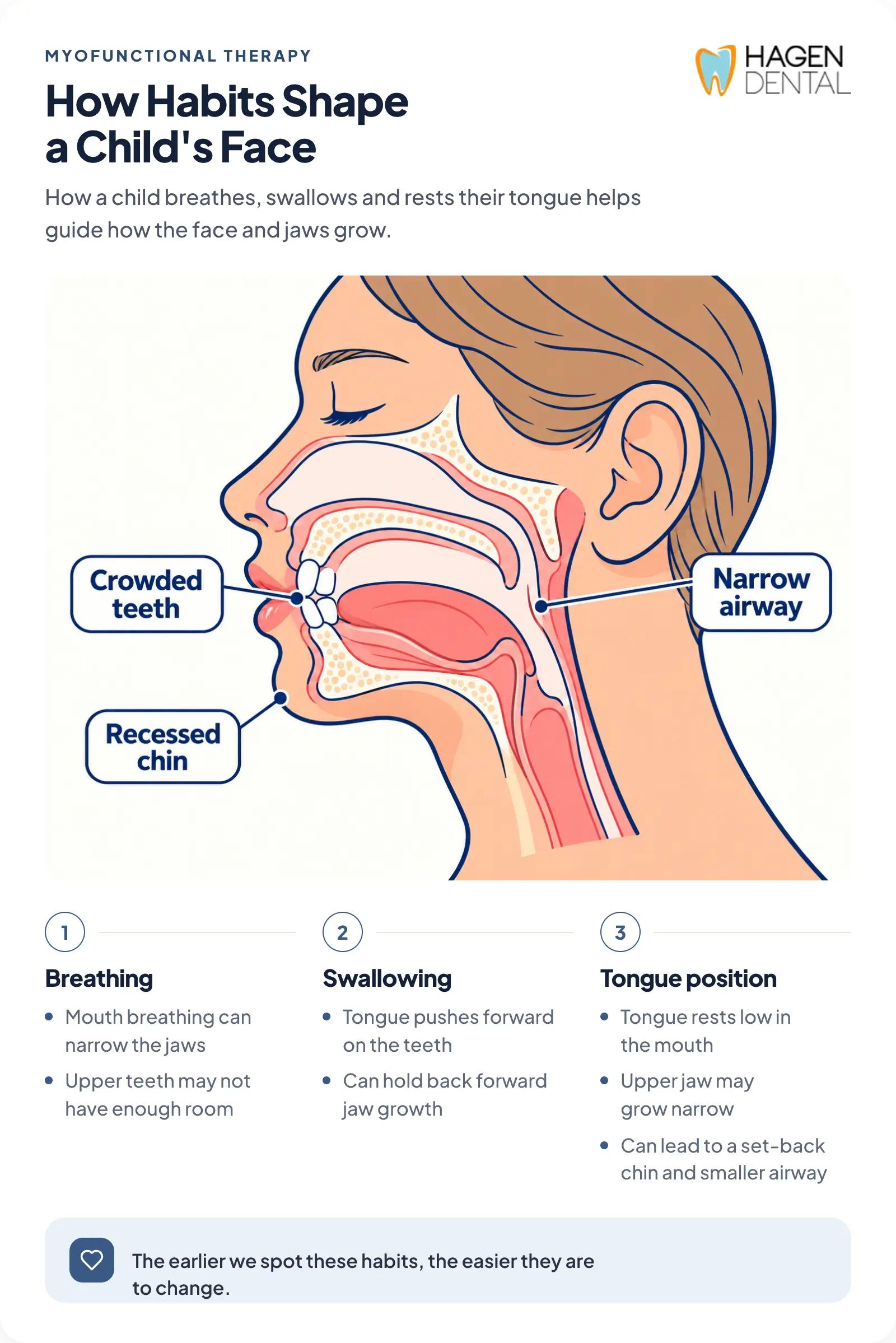
- Proper Tongue Posture — At rest, the tongue should sit gently against the roof of the mouth — not on the floor of the mouth or between the teeth. This position supports healthy jaw and facial growth in children and helps maintain orthodontic results at any age.
- Correct Swallowing Pattern — A proper swallow uses the tongue and facial muscles in a coordinated, efficient way. An incorrect swallow — often called a “tongue thrust” — can contribute to tooth movement, bite problems, and strain on the muscles and joints over time.
Who Can Benefit from Myofunctional Therapy?
Myofunctional therapy can make a meaningful difference for both children and adults experiencing a wide range of concerns, including: sleep apnea or sleep-disordered breathing; snoring; tongue or lip ties (before or after a frenectomy); open-mouth posture or chronic mouth breathing; tongue thrust; teeth clenching or grinding (bruxism); crowded teeth or orthodontic relapse; concerns about jaw and facial growth in children; difficulty chewing or swallowing; sensitive or overactive gag reflex; speech delays or a history of speech therapy; and challenges with nursing in infants.
Myofunctional therapy is often part of a collaborative, team-based approach — working alongside your dentist, orthodontist, pediatrician, ENT, sleep specialist, lactation consultant, or speech therapist to address the full picture of your health.
What to Expect: Your Myofunctional Therapy Journey
- Step 1 — Comprehensive Evaluation. Your myofunctional therapist will review your medical and dental history, discuss your symptoms, assess your airway and breathing patterns, examine the lips, tongue, and oral structures, and take photos as needed to document posture and function.
- Step 2 — Personalized Treatment Plan. Based on the evaluation findings, your therapist will discuss how the findings relate to your symptoms, explain whether therapy is recommended, coordinate with your dentist or other providers when necessary, and create a customized exercise plan based on your needs, goals, and age.
- Step 3 — Regular Therapy Visits. Appointments are typically scheduled every two to three weeks and last about 30 minutes. During each visit, your therapist reviews progress, checks technique, and gradually introduces new exercises as you build strength.
- Step 4 — Building Lasting Habits. Treatment length varies and depends heavily on consistency with home exercises. Most patients work with us for several months, allowing new, healthy habits to become automatic and long-lasting.
Myofunctional Therapy for Kids
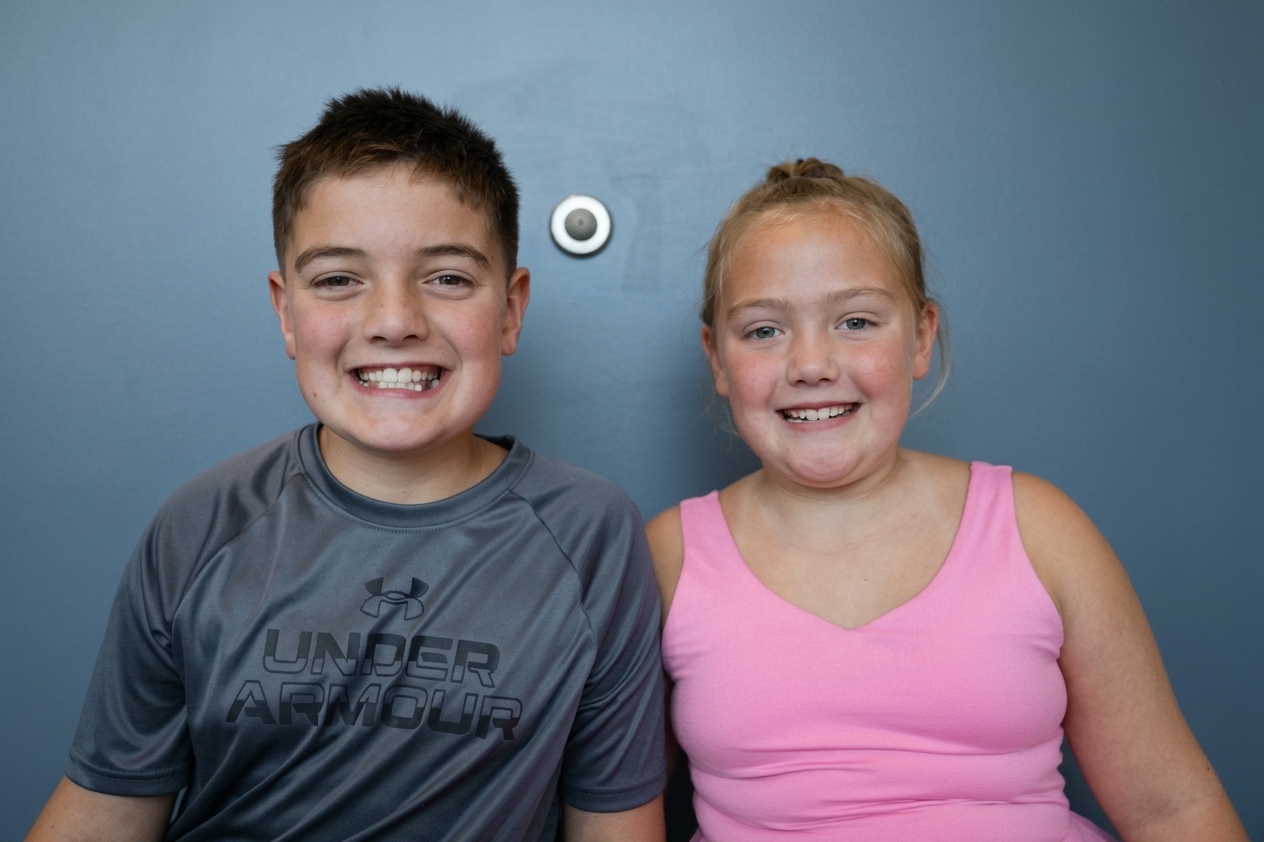
Healthy oral habits established early in life can have a lasting influence on how the face and jaws grow. For children, myofunctional therapy may help with supporting proper jaw and facial development, improving nasal breathing and reducing mouth breathing, decreasing the risk of orthodontic problems or relapse, and supporting clearer speech and better sleep. We work gently and patiently with children, using age-appropriate exercises and plenty of encouragement.
Myofunctional Therapy for Adults
It’s never too late to improve function. Adults often seek myofunctional therapy for sleep apnea or snoring, chronic mouth breathing or daytime fatigue, jaw tension, clenching, or grinding, orthodontic relapse after braces or aligners, and ongoing issues with swallowing, chewing, or speech. The goal is to help you breathe more efficiently, sleep more soundly, and protect your teeth and jaw joints over the long term.
Quick Self-Screening
A myofunctional evaluation may be beneficial if any of the following sound familiar: feeling tired or unrefreshed during the day even after a full night’s sleep; snoring or grinding teeth at night; breathing through the mouth during the day or while sleeping; crowded teeth or teeth that have shifted after braces; a history of speech problems or speech therapy; frequent ear infections, allergies, anxiety, depression, or gastrointestinal issues; and difficulty chewing, swallowing, or nursing.
Frequently Asked Questions
Is myofunctional therapy painful? Not at all. The exercises are gentle and non-invasive. You may feel your muscles working — similar to any new exercise — but the process should never be painful.
Is it just for kids? No. Both children and adults can benefit. Every program is customized based on age, needs, and goals.
Will I still need braces or other treatment? Myofunctional therapy doesn’t replace orthodontics or medical treatment, but it can support and stabilize those results by correcting the underlying habits that may have contributed to the problem.
How much time does it take at home? Most exercise routines can be completed in short sessions throughout the day. Your therapist will design a plan that fits into your daily routine as easily as possible.
If you think you or your child might benefit from myofunctional therapy — or if you’re simply curious and want to learn more — contact our office at (701) 347-5345 or request an appointment online to get started.
Questions about myofunctional therapy? We're happy to help
You don’t need to have it all figured out before you reach out — that’s what we’re here for. Bring us your questions about myofunctional therapy and we’ll give you honest answers and a plan that fits your life. Book online anytime, or call (701) 347-5345, Monday–Thursday, 7am–4pm.